
Introduction :
In a world where digital technology is transforming our habits, connected challenges like the corporate connected race are emerging to boost collectiveengagement . These sporting challenges, carried out via cell phone and organized in teams, combine the spirit of competition with technology to create motivating shared experiences.
Thanks to real-time rankings, engaging content and attractive rewards, these challenges meet a variety of challenges: strengthening team cohesion and improving quality of life in the workplace, rallying people around a common cause, facilitating the integration of new employees or boosting sales performance.
The effectiveness of these initiatives can be measured in concrete terms:
- participation rate,
- regularity of weekly activity,
- number of challenges met,
- progress towards the recommended target of 150 to 300 minutes of physical activity per week.
Beyond the individual benefits, these challenges also generate a measurable impact on the community, creating a virtuous circle between personal well-being and collective engagement .
Contents :
- Why launch a connected challenge now?
- What a connected sports challenge (really) is
- How to design a connected race challenge that engages your teams
- RGPD & ethics: the checklist for a responsible connected challenge
- FAQ
- Why choose OuiLive for your corporate sports challenges?

Why launch a corporate connected race?
Sedentary lifestyles are on the rise. In 2022, around 31% of adults worldwide were not meeting recommended levels of physical activity, a figure that has risen since 2010.
The World Health Organization (WHO) recommends at least 150 to 300 minutes of moderate-intensity aerobic activity per week for adults (or 75 to 150 minutes of sustained intensity, or an equivalent mix).
A connected sports challenge helps your teams get back into active routines, both remotely and at the office.
What a connected sports challenge (really) is
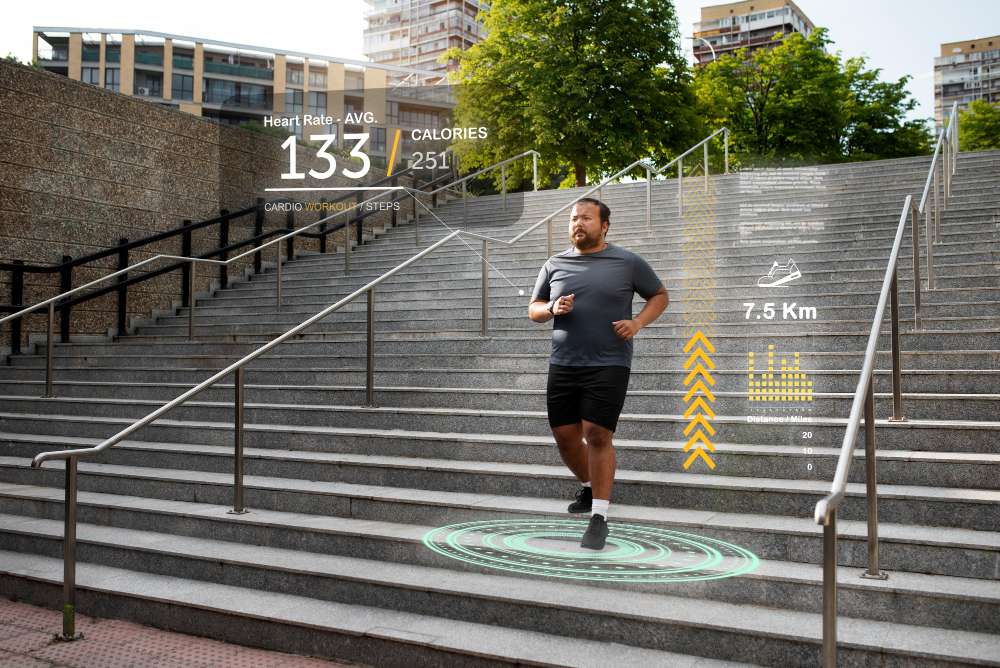
A connected challenge combines a mobile application and game mechanics: tracked activities (steps, walking, running, cycling), teams and rankings, interactive content (quizzes, mini-missions, photos), rewards (internal prizes, solidarity donations).
Research suggests small-to-moderate positive effects of gamification on motivation, behaviors and learning outcomes, with rankings, badges and performance graphs in particular supporting a sense of competence and purpose.
How to design a connected race challenge that engages your teams
1) Frame your business & HR objectives
- QVCT / health prevention: progress towards 150-300 minutes per week, regularity of activity, perceived well-being.
- Onboarding & culture: values quiz, "Welcome" missions, cohort leaderboards.
- Sales enablement: activation challenges (customer visits, shared pitches), product quizzes.
- Impact / CSR: "kilometers = donations" challenges or sponsorship of associations.
2) Choose proven game mechanics
- Badges & levels: reinforcing progression and a sense of competence.
- Team rankings: healthy competition and mutual support.
- Narrative / missions: giving meaning and belonging (cause-based storytelling).
3) Make the experience mobile-first
A 100% mobile format eliminates friction: registration in minutes, automatic tracking (step/smartwatch), notifications and real-time analytics. This is precisely the OuiLive playground: intuitive interface, +200 templates and dedicated support.
4) Create a clear activation schedule (3-4 weeks)
- Week 0: teasing, manager communication kit, technical test.
- Week 1: launch and easy challenges (onboarding, first badges).
- Week 2: themed missions (health, safety, values, product).
- Week 3: final, live, prize-giving, announcement of donations.
5) Measure, learn, iterate
- Adoption & retention: registration rate, weekly assets, challenge completion.
- Health & habits: minutes of activity, steps per day, progression versus WHO recommendations.
- Business: knowledge score (quiz), activated leads/sales (if sales scope).
- Impact: donations, solidarity km, content viewed and shared.
RGPD & ethics: the checklist for a responsible connected challenge
- Legal basis & explicit consent: free, specific, informed and unambiguous consent; no negative consequences in the event of refusal.
- Minimization: collect only what is necessary (e.g. steps per minute, no detailed physiological data).
- Contractual framework (subcontracting): compliant data processing agreement (purpose, duration, categories, security).
- Security: encryption, access management, logging, retention plan; based on the CNIL 2024 Guide.
- Article 9(2) exceptions: check the basis for authorizing the processing of health data where applicable.
- Information & rights: clear notice, retention period, access/deletion rights.
FAQ
How long should a connected challenge last?
Between 3 and 4 weeks to establish routines without exhausting motivation. Sprint" formats (10-14 days) work well for product/sales objectives.
How to include the less athletic?
Focus on easy challenges (walking, soft mobility), heterogeneous teams, accumulated levels, and non-physical missions (quizzes, microlearning).
Can we link the challenge to a cause?
Yes, and it's very engaging: solidarity formats allow you to convert kilometers into donations or support humanitarian programs.
How do you prove impact?
Define KPIs before launch, tracking progress towards 150-300 min per week, challenges completed, knowledge score (quiz) and solidarity impact (donations/km). Based on WHO benchmarks and your QVCT objectives.
Why choose OuiLive for your corporate sports challenges?
- Fast, turnkey launch: intuitive interface, +200 ready-to-use templates.
- 100% mobile format, really engaging: rankings, challenges, rewards tailored to your teams.
- Measurable results: real-time analytics onengagement and performance.
Looking for a tailor-made "connected race challenge"? We design your editorial line, your mechanics and your impact KPIs, and enable you to manage the operation from start to finish.
Sources :
- Action contre la Faim - The Connected Challenge (2025 edition)
- World Health Organization - Physical activity fact sheet
- WHO - Guidelines on physical activity and sedentary behaviour (2020)
- Ministère des Sports - Recommendations for adults (150-300 min)
- Ministry of Health - Physical activity, sedentariness and health